

Research project
Food Justice: best practice in the US and UK
- Start date: 1 January 2025
- End date: 30 December 2026
- Funder: ESRC
- Value: £30,000
- Partners and collaborators: Riverdale Neighbourhood House (RNH) and Foodwise Leeds
- Primary investigator: Dr Effie Papargyropoulou
- Co-investigators: Prof. Sara González
- External co-investigators: Sonja Woodcock, Emma Pollack, Andrew Belton
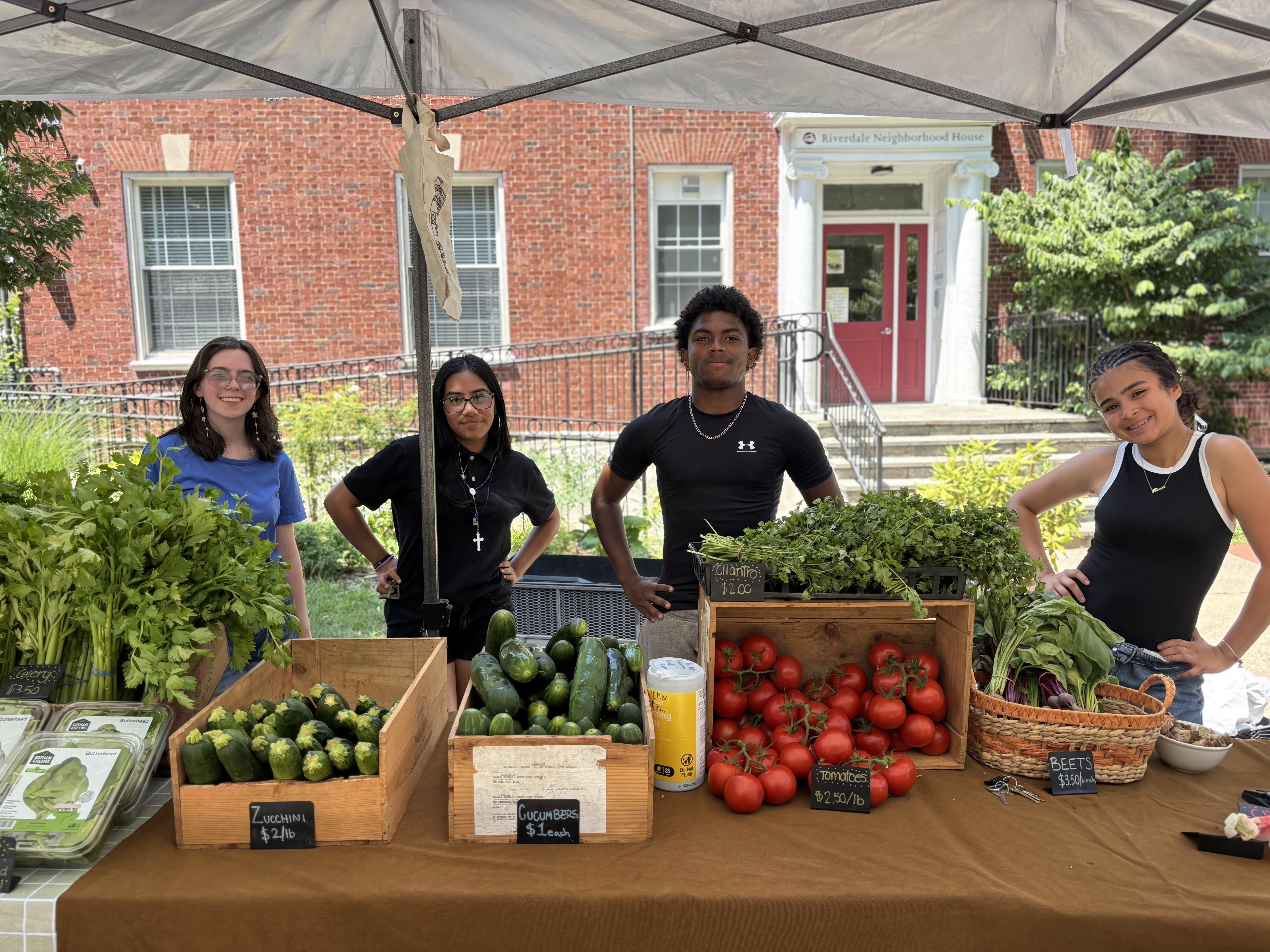
This project focuses on advancing food justice by facilitating a knowledge exchange between food justice practitioners and researchers in the United States and the United Kingdom.
Food justice aims to ensure fair access to healthy, affordable, and culturally appropriate food, while addressing the structural inequalities that drive food insecurity, environmental harm, and social exclusion. Building on prior research evaluating the impact of community-based food initiatives, the project centres on Riverdale Neighbourhood House (RNH) in New York and its Food and Farm Hub as an example of best practice.
The project involves a Knowledge Exchange Fellowship, through which a senior practitioner from RNH will visit the University of Leeds. During this visit, the fellow and Leeds academics will co-produce a practical case study showcasing effective food justice approaches and strategies for scaling up impact.
Activities include site visits to UK-based food justice organisations, workshops and roundtable discussions, participation in a conference panel, guest teaching on a postgraduate course, and engagement with local food partnerships and third-sector networks.
The project will also promote the Food Hubs Impact Evaluation Tool to support organisations in evidencing their social, environmental, and economic impact.
Impact
The project will generate societal, economic, and academic impact. It will support third-sector organisations to strengthen their strategies, improve their ability to demonstrate impact, and access future funding—ultimately helping to reduce food insecurity and inequality.
By fostering international collaboration and shared learning, the project will contribute to healthier, more resilient communities, more sustainable local food systems, and a stronger evidence base for food justice policy and practice in both the UK and the US.