

Research project
PROFEED: Progressive Solutions for European Feed Autonomy through Sustainable Plant Protein Value Chains
- Start date: 1 October 2026
- End date: 30 September 2030
- Value: €5.5 million (approx. £4.6 million)
- Partners and collaborators: Universidad de Murcia (UM), The James Hutton Institute (JHI), Biopower Technologies Limited, Horizon Europe Leading Projects SL (HELPEU), IDENER Research & Development AIE, Universidade Católica Portuguesa (UCP), Celabor SCRL, Technische Hochschule Nürnberg Georg Simon Ohm (THN), EUFARMS (European Network of Regenerative Organic Farms), CER Groupe, Centre Wallon de Recherches Agronomiques (CRA-W), Instituto Murciano de Investigación y Desarrollo Agrario y Medioambiental (IMIDA), Centro Ricerche Produzioni Animali (CRPA), Nofima
- Primary investigator: Dr Christine Bosch
- Co-investigators: Dr. Alan Javier Hernandez Alvarez, Dr Anthony Buckley, Professor Pippa Chapman
- External co-investigators: Dr Katie McDermott, Dr Ruth Wade, Prof Yoselin Benitez-Alfonso, Prof Frank Dunshea (all School of Biological Sciences, University of Leeds)
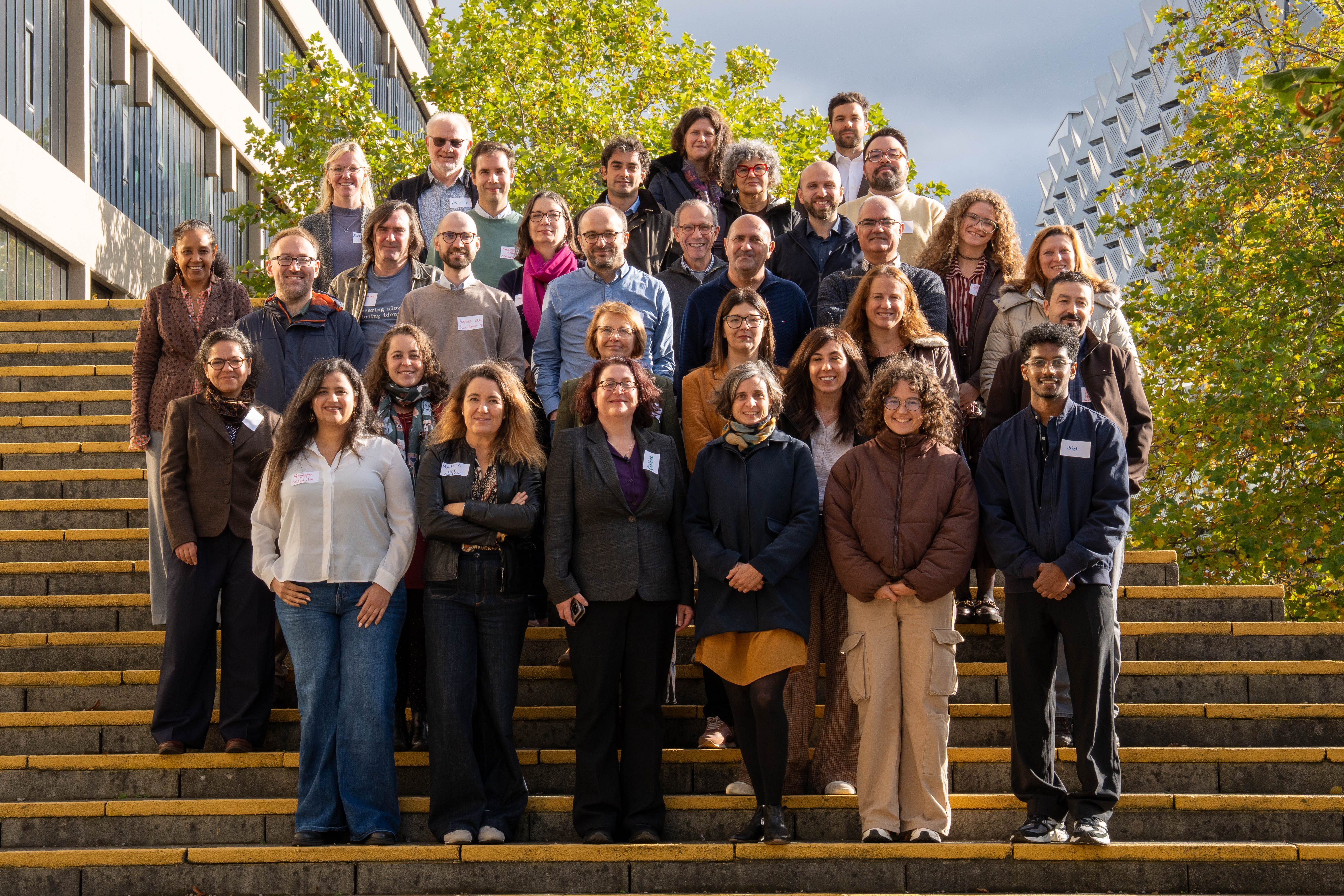
PROFEED is a pan-European collaboration led by the University of Leeds that will develop sustainable, locally sourced plant protein crops to reduce Europe’s dependence on imported protein for animal feed. European livestock farming relies heavily on soybean meal, around 96% of which is imported. This leaves farmers exposed to supply chain disruption, fluctuating prices and the environmental impacts of production overseas.
Bringing together 15 partners from 8 countries, PROFEED connects crop science, farmers, feed technology, animal nutrition and policymaking across the whole feed value chain. The project will work with 40 farmers, 10 Lighthouse Sites and 4 Communities of Practice across diverse European farming environments, using workshops and surveys to understand the barriers farmers face and to co-design practical solutions with them.
More than 130 soybean, lupin and alfalfa varieties will be screened in controlled growth facilities under current and future climate conditions to identify the most resilient, high-protein options. The most promising varieties will then be grown in field trials on working farms across four European climatic regions, alongside farming practices that support biodiversity. The harvested crops will be processed using low-impact methods and tested in new feed formulations for pigs, poultry and farmed fish.
The project will also assess the environmental and economic performance of local protein value chains and work with stakeholders to co-create regional and EU-level roadmaps for greater protein self-sufficiency. At Leeds, researchers coordinate the project and lead the on-farm field trials, the analysis of crop protein quality and the pig feeding trials.
Project aims
PROFEED aims to make Europe’s animal feed system more sustainable and competitive by boosting the production and use of climate-resilient, high-protein crops, reducing dependence on imports and supporting biodiversity-friendly, low-carbon farming. Its main aims are to:
- Set up 10 Lighthouse Sites and 4 Communities of Practice that bring farmers, advisers, industry and policymakers together
- Map Europe’s knowledge on protein crops for feed and build an open-access Digital Platform to support decision-making
- Identify and test climate-resilient, high-protein soybean, lupin and alfalfa varieties suited to different European regions
- Develop low-impact processing methods that improve the quality and digestibility of crop protein
- Develop and test new feed formulations for pigs, poultry and farmed fish
- Co-create regional and EU-level roadmaps for protein self-sufficiency
- Provide training and share knowledge widely, including through a multilingual online course
Impact
PROFEED will help Europe produce more of its own protein for animal feed, making farms and supply chains more resilient to price shocks, trade disruption and climate change. The project aims to deliver validated feed formulations that could reduce the use of soybean meal by up to 30%, while nitrogen-fixing legume crops can improve soil health, reduce the need for synthetic fertilisers and support biodiversity.
To support uptake across Europe, PROFEED will create an open-access Digital Platform and a harmonised European database bringing together data, predictive models, best practice and training resources. A multilingual Massive Open Online Course (MOOC) will offer tailored training for farmers, advisers, industry and policymakers.
By building local protein value chains, the project will also create new economic opportunities for rural communities. Its roadmaps and policy briefs will inform the Common Agricultural Policy, the European Green Deal and the Farm to Fork Strategy, supporting EU ambitions for strategic autonomy, food security and sustainable agriculture.