

News
Billions of tonnes of ice lost from Antarctic Ice sheet
Scientists have calculated that the fastest changing Antarctic region - the Amundsen Sea Embayment - has lost more than 3,000 billion tonnes of ice over a 25-year period.
Satellites reveal speed-up of Antarctic glaciers
Glaciers along the Antarctic peninsula are flowing faster in the summer because of a combination of melting snow and warmer ocean waters, say researchers.
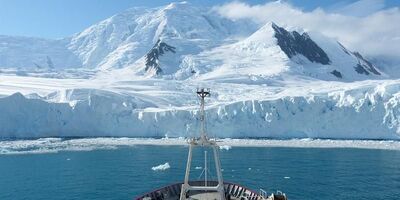
Satellites reveal speed-up of Antarctic glaciers
Glaciers along the Antarctic peninsula are flowing faster in the summer because of a combination of melting snow and warmer ocean waters, say researchers.

Fossil study reveals origins of biodiversity gradient
Researchers have used nearly half a million fossils to solve a scientific mystery - why the number of different species is greatest near the equator and decreases towards polar regions.
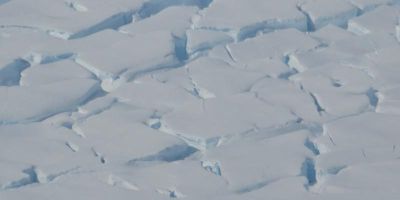
AI to monitor changes to globally important glacier
Scientists have developed AI to track the development of crevasses - or fractures - on the Thwaites Glacier ice tongue in west Antarctica.