

Research project
AquaRoots: Rooting Shrimp Farming in Biodiversity for Climate Resilience and Food Security
- Start date: 1 July 2026
- End date: 30 June 2029
- Value: £990,000.00
- Partners and collaborators: Asesoría y Servicio de Laboratorio (AYDILAB), Acuícola "La Ensenada", Cooperativa "Leonor Cuadras Cuadras", Gobierno Indígena Yoreme-Mayo, Cooperativa "Carey Costa Azul", Centro de Investigación en Alimentación y Desarrollo (CIAD) Mazatlán Unit, Universidad Politécnica del Valle del Évora (UPVE), Gobierno Municipal de Angostura, Coordinación General para el Fomento a la Investigación Científica Innovación del Estado de Sinaloa (CONFIE), Comision Nacional Forestal (CONAFOR), Comisión Nacional de Áreas Naturales Protegidas (CONANP), Comisión Nacional de Acuacultura y Pesca (CONAPESCA)
- Primary investigator: Dr. Alan Javier Hernandez Alvarez
- Co-investigators: Professor Claire Helen Quinn, Dr Gabriela Lopez-Gonzalez
- Postdoctoral researchers: Dr Oscar Abel Sánchez Velázquez (School of Food Science & Nutrition, University of Leeds)
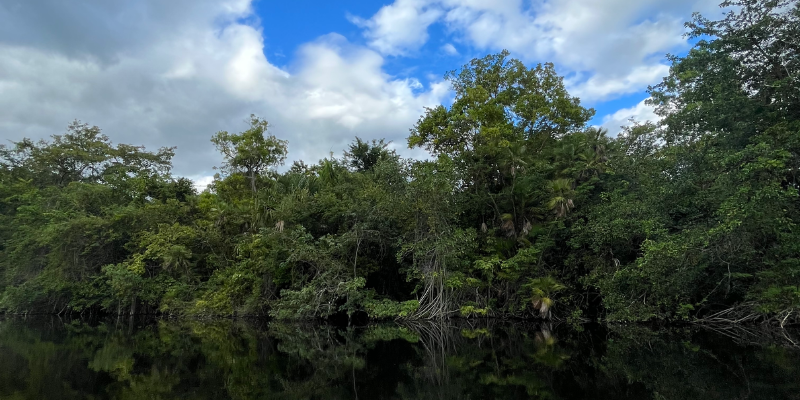
AquaRoots is an interdisciplinary UK–Mexico collaboration led by the University of Leeds that will develop and evaluate biodiversity-based silvoaquaculture systems integrating mangrove restoration, sustainable shrimp production, and community-led environmental monitoring. By combining ecological restoration, food systems research, nutritional assessment, citizen science, and participatory governance, the project will generate robust scientific evidence to support climate-resilient aquaculture while enhancing biodiversity conservation and local livelihoods. Working closely with government agencies, academic institutions, Indigenous Yoreme-Mayo communities, women's cooperatives, and aquaculture producers, AquaRoots will co-design scalable nature-based solutions and decision-support tools that strengthen food security, improve coastal ecosystem resilience, and inform policy for sustainable blue economies in Mexico and beyond.

Impact
Biodiversity-Based Aquaculture:
The project will demonstrate how biodiversity-based shrimp farming integrated with mangrove conservation can enhance climate resilience, improve ecosystem health, and support sustainable food production in vulnerable coastal regions.
Mangrove Restoration and Climate Resilience:
Nature-based restoration strategies will strengthen mangrove ecosystems, increasing carbon sequestration, coastal protection, biodiversity conservation, and the resilience of aquaculture systems to climate-related disturbances.
Community-Led Innovation:
AquaRoots will co-develop practical solutions with Indigenous Yoreme-Mayo communities, women-led groups, aquaculture producers, and local authorities, ensuring that scientific innovation is grounded in local knowledge and community priorities.
Evidence for Sustainable Food Systems:
The project will generate interdisciplinary scientific evidence on the environmental, social, economic, and nutritional benefits of silvoaquaculture, supporting the transition towards more sustainable and resilient aquatic food systems.
Decision Support and Policy Development:
Scientific data, participatory monitoring, and ecosystem assessments will be translated into practical decision-support tools and policy recommendations to guide biodiversity-friendly aquaculture and coastal management.
Capacity Building and Knowledge Exchange:
Through training, citizen science, and international collaboration between the UK and Mexico, the project will strengthen local capacities, promote knowledge exchange, and establish a lasting network of researchers, practitioners, government agencies, and coastal communities.
Scalable Nature-Based Solutions:
The project will develop and evaluate transferable models of biodiversity-based aquaculture that can be adapted to other coastal regions facing similar challenges related to climate change, food security, and ecosystem degradation.
Food Security and Sustainable Livelihoods:
By improving the sustainability and resilience of shrimp farming while conserving mangrove ecosystems, AquaRoots will contribute to more secure livelihoods, diversified income opportunities, and long-term food security for coastal communities.