Social benefits of renewable energy on Sumba Island, Indonesia

Research highlights the importance of including cultural and social benefits when designing renewable energy projects, through a study of Indonesia's 'Iconic Island' programme.
Sumba Island in Indonesia has a remarkable megalithic ancestor worship culture known as ‘Marapu’. The island has few of the rich natural resources found elsewhere in Indonesia, so waves of change that affected other parts of the country passed by the island, leaving the indigenous societies intact.
The Indonesian government selected Sumba for its ‘Iconic Island’ programme of renewable energy electrification to provide equitable access to modern, clean sources of energy for the 750,000 inhabitants in line with Sustainable Development Goal 7.
The hope was to end dependency on fossil fuels and support gender-balanced development and economic activities.
A recent paper by Dr Hafidz Wibisono and Muhammad Al Tumus of Universitas Gadjah Mada, Professor Jon Lovett and Dr Cheng Wen from the School of Geography at Leeds, and Siti Suryani from the Wira Wacana Christian University on Sumba Island, examines the social benefits of a renewable energy project that was part of the Iconic Island programme.
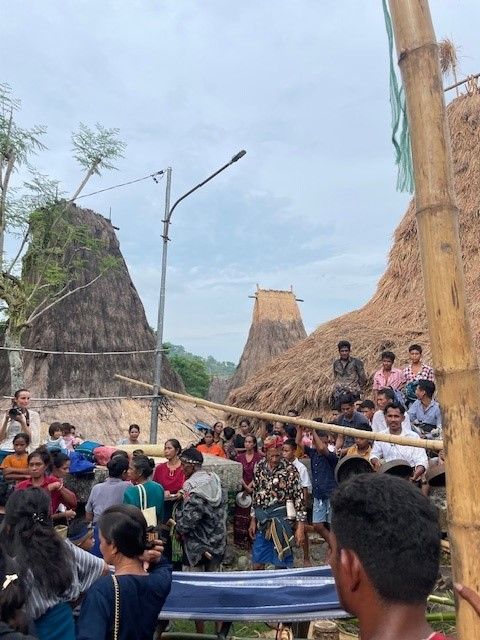
A solar powered light in the central part of a traditional Sumba village brings modern technology to provide light for cultural ceremonies that will go on after night fall. Credit: Jon Lovett
Jon Lovett describes the background to the research, which was supported by a grant from the UK Engineering and Physical Sciences Research Council (EPSRC) and a PhD Scholarship to Hafidz from the Indonesian Ministry of Education and Research.
He says: “A lot of money was invested in the Iconic Islands programme and it has made a real difference to electricity access for remote rural communities, but not all the projects were successful. There were some notable failures where the latest solar and wind technologies were installed, but engineers did not work closely with the communities who would be maintaining and operating the generating systems, and they stopped working after a year or so.”
The team’s research focused on the Kalilang micro-hydropower plant in Kambata Bundung Village, East Sumba.
Hafidz explains: “The Kalilang micro-hydro is in a remote location but is successful because the community was involved in its design and construction from the very beginning, with training for operation and maintenance skills by the local people. For example, the villagers constructed 2.6 kilometres of access track to open up the hydropower site and get the equipment installed.”
Jon Lovett continues: “On Sumba, it is remarkable to see the latest renewable energy technologies side by side with an ancient belief system that is one of the few surviving megalithic cultures worldwide. Communities have used electricity to support traditional rituals with the use of lighting and loudspeakers.”
Hafidz says: “Our study was able to combine qualitative and quantitative techniques to put a value on the social benefits of electricity. In addition to the use in traditional rituals, more importantly perhaps, electricity was used for information and knowledge exchange through telephones, television, computers and lights for children to study at night.”
The study concludes that these social benefits are important to include in the design and financial planning for renewable energy power projects that provide electricity to remote rural communities for the first time.
Hafidz highlights: “If electricity is viewed strictly as a commodity, the low economic returns in areas like one that is served by Kalilang Micro-Hydro might suggest project failure; however, when viewed through the lens of social security, the generation of non-economic benefits validates the investment of electricity as a public good.”
More information
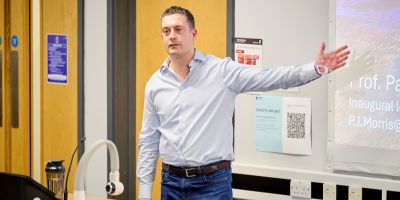
Top image: Jon Lovett from the School of Geography and Jane Dawson, Head of External Affairs at the UK Electrical Contractors Association, receive a traditional welcome from Ibu Raynesta Malo, Head of the University Cooperation Unit of Universitas Kristen Wira Wacana Sumba. Credit: Jon Lovett