

Research project
ELEVATE
- Start date: 1 June 2021
- End date: 31 May 2026
- Funder: EPSRC
- Value: £1,707,997
- Partners and collaborators: University of Brighton, University of Oxford, Technical University of Eindhoven, Technical University of Dortmund
- Primary investigator: Dr Ian Philips
- Co-investigators: Professor Jillian Anable
- External co-investigators: Professor Christian Brand, Dr Mary Darking, Dr Sally Cairns, Associate Professor Frauke Behrendt, Professor Eva Heinen

ELEVATE (Innovative Light ELEctric Vehicles for Active and Digital TravEl)
The Project team
Dr Ian Philips (PI), Prof Jillian Anable, Dr Noel Cass, Dr Caroline Tait [University of Leeds]
Dr Alice de Sejournet, Prof Christian Brand, Dr Labib Azzouz, [University of Oxford]
Dr Mary Darking, Dr Sally Cairns Dr Nick Marks. [University of Brighton]
Prof Eva Heinen, Professor at Eidgenössische Technische Hochschule (ETH) Zürich
Assoc Prof Dr Frauke Behrendt, Clara Glachant [TU Eindhoven]
Further information contact: i.philips@leeds.ac.uk
What is the aim of the project?
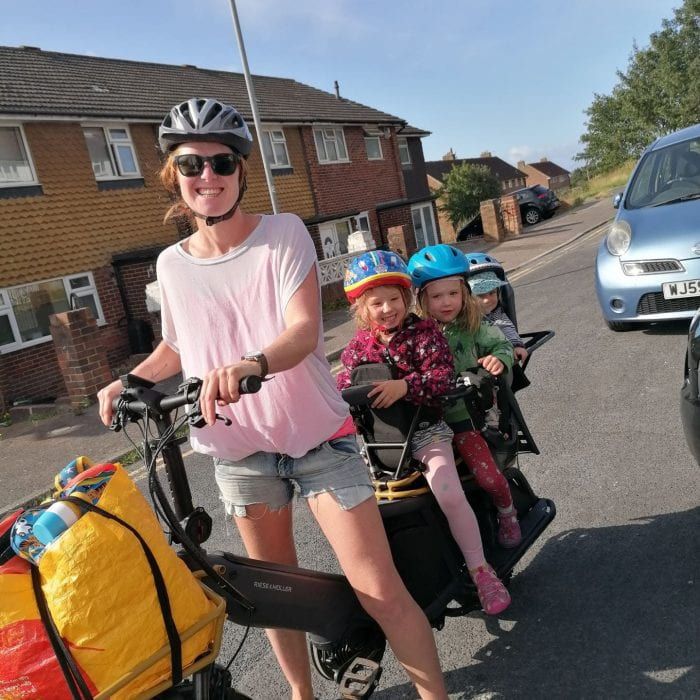
The vehicles we travel around in are too big and getting bigger. e-micromobility can help us get to some places in vehicles that need a lot less material to make, cost less, take up less space, and have far less impact on the environment.
The project aim is to understand the potential of existing and new forms of e-micromobility, (e.g. e-cargo bikes, e-bikes and e-scooters) including identifying the people, places and circumstances where they will be most useful, in order to reduce mobility-related energy demand and carbon emissions while improving people's health.
Our objectives are:
- Assess the potential uptake of e-micromobility, considering individual attitudes, social practices, the policy and governance environment adn different future scenarios.
- Understand the decarbonisation potential of e-micromobility.
- Understand barriers and enablers of uptake of e-micromobility (specifically e-cargo bikes)
- Evaluate impacts of e-micromobility (especially e-cargo bikes) on physical and mental health and wellbeing
- Share insights into e-micromobility with users and potential users, policy makers, industry and third sector organisations.
What have we done?

We have carried out mixed-methods research trials which ran in Leeds, Brighton and Oxford. We gathered both quantitative and qualitative data from these research trials. Given the context of their neighbourhood transport and other available transport methods, we are using this data to build an understanding of the potential for households who have access to e-micromobility vehicles to reduce their transport carbon emissions. Data collected includes: Surveys, semi-structured interviews, travel diaries, GPS traces, social media interactions and researcher reflections. Also, surveys, semi-structured interviews, travel diaries, GPS traces, social media interactions and researcher reflections. Elevate also held a stakeholder workshop focused on E-(Cargo) Bikes: Finance and Access, which featured presentations from key stakeholders on current evidence and existing themes including: the e-cycle market and industry priorities, the current Cycle to Work scheme, increasing cycle access for people on low incomes or not in employment, the Green Bike Pool and National grants for e-bikes and e-cargo bikes.
Additionally, we have conducted stakeholder interviews with policymakers, local authority officers and people from third sector organisations. We have attended e-bike industry events and we have carried out a Nationally representative survey of 2000 people asking about their use of and attitude towards e-bikes, e-cargo bikes and e-scooters. We have also helped to expand the World Health Organisation’s Health Economic Assessment Tool (HEAT) to include e-bikes.
Why are we doing this?
The UK transport sector lags behind other sectors in its achievement of carbon emission reductions to date. There is now no realistic pathway for reaching the 2030 decarbonisation targets for transport without a 20-30% reduction in car use.
The Committee on Climate Change has been critical of this failure and sees an important part of the solution as rapidly increasing rates of walking and cycling, and identifying an appropriate role for vehicles such as e-bikes and e-scooters.
However, there is uncertainty about how people in different types of places would actually use these modes and how these modes would affect overall travel behaviour, physical activity and energy demand in practice.
This £1.7 million project is part of the CREDS research community and funded by UK Research and Innovation (Grant reference: UKRI EP/S030700/1)
Publications and outputs
- Azzouz, L., Brand, C., Cass, N. and Philips, I. (2025). Miles with smiles: the role of e-cargo bikes in facilitating new personal and family-oriented travel and relevant beyond-utility motivations. Travel Behaviour and Society, 43, pp.101217–101217. doi: https://doi.org/10.1016/j.tbs.2025.101217.
- Cass, N., Philips, I., Azzouz, L. and Marks, N. (2025). How do electric cargo bikes fit with real life? A social practice analysis in the United Kingdom. Energy Research & Social Science, 130, p.104439. doi: https://doi.org/10.1016/j.erss.2025.104439.
- Philips, I., Cairns, S., Séjournet, A. de, Anable, J., Labib Azzouz, Behrendt, F., Brand, C., Cass, N., Darking, M., Glachant, C., Heinen, E., Marks, N. and Nelson, T. (2025). E-Cargo Bikes as a Personal Transport Mode in the UK: Insights from National Surveys and Suburban Trials. Journal of Cycling and Micromobility Research, 6: 100093 doi: https://doi.org/10.1016/j.jcmr.2025.100093
- Glachant, C., Cass, N., Marks, N. and Labib Azzouz (2025). Between or Beyond Bicycles and Cars? Navigating E-Cargo Bike Citizenship in the Transition to Sustainable Urban Mobility. Geoforum,166, pp.104416–104416. doi: https://doi.org/10.1016/j.geoforum.2025.104416.
- Glachant, C., Séjournet, A. de, Philips, I., Behrendt, F. and Cairns, S. (2025). Experienced and Imagined Barriers to E-Cargo Bike Adoption: Findings from Trial Loans in the UK. Preprints.org. doi: https://doi.org/10.20944/preprints202508.0437.v1
- Philips, I., Labib Azzouz, Séjournet, A. de, Anable, J., Behrendt, F., Cairns, S., Cass, N., Darking, M., Glachant, C., Heinen, E., Marks, N., Nelson, T. and Brand, C. (2024). Domestic Use of E-Cargo Bikes and Other E-Micromobility: Protocol for a Multi-Centre, Mixed Methods Study. International Journal of Environmental Research and Public Health, 21(12), pp.1690–1690. doi: https://doi.org/10.3390/ijerph21121690.
- Philips I, Brown L, Cass N. 2024. E-bike use and ownership in the Lake District National-Park UK. Journal of Transport Geography. https://doi.org/10.1016/j.jtrangeo.2024.103813
- Cass, N., Marsden, G., Brown, L. and Anable, J. Changing mobility practices – can we learn from crises? Soziologie und Nachhaltigkeit. https://doi.org/10.17879/sun-2024-5278
- Behrendt, F.; Heinen, E.; Brand, C.; Cairns, S.; Anable, J.; Azzouz, L. Conceptualizing Micromobility. Preprints 2022, 2022090386 https://www.preprints.org/manuscript/202209.0386/v1.
The ELEVATE research project has various research outputs, including:
- Interim Stakeholder Consultation Documents
- ELEVATE Stakeholder Workshops
- Archived Data
- Book Chapters
- Reports and Briefing Notes
- Academic Conference Papers
- Academic Conference Presentations
- Presentations to Communities and Policymakers
- External Blogs and Media Mentions
- Global Cycling Network Youtube Video Featuring the ELEVATE project
Follow ELEVATE on social media
Facebook: https://www.facebook.com/ELEVATELeeds/
Bluesky: @micromobility-its.bsky.social